
"Uganda vs Ethiopia coffee"
146000 article(s) found

Uganda Coffee Grind Processing Flavor Description Region Features Taste Manor Introduction
Ugandan coffee beans have a unique flavor and fragrance, which is very suitable for making Italian and other flavors of coffee. More importantly, Ugandan coffee beans are strictly screened according to international market standards to ensure their high quality and pollution-free characteristics. Africa is home to Arabica and Robusta, two major coffee varieties, while East Africa enjoys a plateau of water and the pearl of East Africa.

A brief introduction to the cultivation of fresh-flavored Ugandan boutique coffee beans, geographical location, climate and altitude
Ugandan coffee is mainly exported to the European Union, of which Germany, Italy and other countries are the largest buyers of coffee. Uganda is the country of origin of coffee grown in Robusta, but commercial cultivation of Arabica species here did not begin until early 1900. Today, there are still a large number of wild robusta coffee trees in Uganda, which is rare in cities in the world. As a landlocked country, Uganda

The flavor and taste of Ugandan coffee the characteristics of fine coffee in manor area introduce Ugandan coffee.
It is well known that coffee originated in Ethiopia, the earliest Arabica variety, while Robusta originated in Uganda, both of which are from Africa. As the hometown of coffee, Africa not only has many excellent coffee varieties, but also is still one of the three largest coffee producing areas in the world. The flavor and taste of African coffee is the most complex.

African boutique coffee beans Uganda Uganda coffee beans
Uganda Uganda Coffee introduction in Uganda (Uganda), Arabica coffee beans account for only 10% of the country's total coffee production, but it is enough to attract attention. The best coffee in Uganda is mainly produced in the mountains of Elgon and Bugisu along the Kenyan border in the north and Ruwensori in the west.

Macchiato VS. Latte VS. Cappuccino? What kind of milk should latte macchiato use?
Latte macchiato adds espresso to steamed milk, and latte adds steamed milk to espresso. A cappuccino uses less hot milk than coffee lattes and more foam. Macchiato also has a Machia or espresso logo on the top of the coffee drink. If the latte is in a glass, it is usually served with napkins so that customers

A brief introduction to the flavor, taste and aroma characteristics of plain and mild Ugandan boutique coffee beans
This coffee is produced in the Mount Elgonne region of Uganda. Balanced acidity and rich oil between 1600 and 1900 meters above sea level are the characteristics of this coffee. It tastes mild and simple, with a papaya flavor. Dry aroma (1-5): 3.2 wet aroma (1-5): 3.4 acidity (brightness) (1-10): 8 taste (hierarchy) (1-10): 8.5 taste (alcohol thickness)

Introduction to varieties of Ugandan Coffee produced by Flavor description, Grinding scale and Taste treatment
Dry aroma (1-5): 3.2 wet aroma (1-5): 3.4 acidity (brightness) (1-10): 8 taste (layer): 8.5 taste (alcohol thickness) (1-5): 4 aftertaste (residue) (1-10): 8.1 balance (1-5): 0 Base score (50): 50 total score (maximum)

What's the difference between Arabica and Robusta coffee beans? The evolution species of Arabica coffee beans are
Professional coffee knowledge exchange more information about coffee beans Please follow the coffee workshop (Wechat official account cafe_style) what's the difference between Arabica and Robusta coffee beans? What kinds of Arabica coffee beans do you have? If the variety of coffee is divided by biology, it can be divided into Arabica, Robusta and Liberica.

Introduction to the origin of coffee beans in Uganda
The equator runs across Uganda, and the suitable climate makes it the main producing area of Robbins coffee beans (Robusta) in the world. In the 1960s, Ugandan coffee production remained at 3.5 million bags a year. By the mid-1980s, coffee production had dropped to 250 bags a year, mainly for political reasons. But now coffee production is on the rise again, currently about 3 million bags a year. Coffee

A brief introduction to the history and culture of the origin and development of plain and mild Ugandan boutique coffee beans
Uganda is the country of origin of coffee grown in Robusta, but commercial cultivation of Arabica species here did not begin until early 1900. Today, there are still a large number of wild robusta coffee trees in Uganda, which is rare in cities in the world. As a landlocked country, the large coffee cultivation in Uganda is often interplanted, where coffee trees are mixed with food crops and rubber trees.

Introduction to the flavor description of Ugandan boutique coffee Bugisu Bugisu AA coffee
The most famous producing areas in Uganda are Bugisu and Elgon, which are 1600-1900 meters above sea level. A pound of AA-grade Bugisu beans can be sold for about the same price as Java. In terms of taste, it is simply described as "thick, bitter, sweet and low acid". The fat is very low, including the fragrance of forage grass and the sweetness of light caramel. Most of these beans are made in Germany and Italy.

Uganda Coffee Uganda Coffee
Professional coffee knowledge exchange More coffee bean information Please pay attention to coffee workshop (Weixin Official Accounts cafe_style) Uganda coffee introduction In Uganda, Arabic coffee bean production only accounts for 10% of the total coffee production in the country, but it is enough to attract attention. Uganda's best coffee is mainly grown in the north along the

Introduction to the characteristics of Ugandan Fine Coffee Bean Flavor Manor
Ugandan coffee is mainly exported to the European Union, of which Germany, Italy and other countries are the largest buyers of coffee. The quality of Ugandan coffee: Bujisu Bugisu AA (only 4% of the country's total production) Bujisu Bugisu A Vago Wugar A (all of the above are water washing treatment) and a small amount of sun-dried bean beads Drugar Bugisu Bugisu AA in which AA said

Introduction to the characteristic varieties and Brands of Uganda Fine Coffee Bean Flavor
In 1890, British troops invaded Buganda. Captain Frederick Frederick Lugard, the agent of the Royal British East Africa Company (later Governor of Hong Kong Luigi), forced King Mwaanga of Buganda to sign protection treaties with him twice. In June 1894, the British government signed the New Testament with Buganda, and Buganda officially became a British protectorate. Then, in 1896, Britain extended its protection to Ukraine
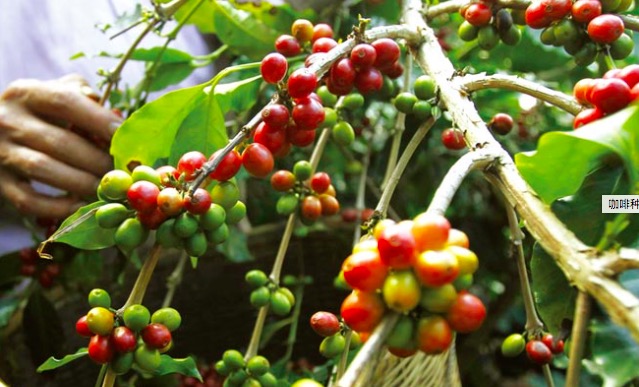
In order to win the top coffee market in Europe, the United States and Japan, Ugandan coffee is not good enough to go to prison.
Uganda does not hesitate to put illegal farmers in jail in order to improve the quality of coffee beans, but experts believe that this can only be achieved by introducing farming programs, education and other incentives. ■ Farming projects, education and other incentives should be used to boost coffee quality rather than arrests. Coffee beans are an important export from Uganda.

Description characteristics of flavor and taste of Ugandan coffee brief introduction of manor planting varieties in producing area
The cultivation of coffee in Uganda is all small-scale family operation. The livelihood of 25% of the population is closely related to coffee production. About 500000 farms grow coffee, but mainly Robster. Robster accounts for 90% of coffee production, and the remaining 1 is Arabica coffee. Arabica and Live Buster are harvested from October to February of the following year. Ugandan coffee

Description of taste and flavor of Ugandan coffee beans introduction to the manor produced by regional treatment method
Comparison of the taste and flavor of Ugandan coffee beans: a unique African coffee, very similar to Indonesian coffee, Ugandan coffee beans have a unique flavor, which is very suitable for making Italian and other flavors of coffee. More importantly, Ugandan coffee beans are strictly screened in accordance with the standards of the international market to ensure their high quality and pollution-free.

Introduction to the characteristics and flavor of Uganda boutique coffee bean manor with unique charm
The people of all parts of Uganda resisted the British aggression tenaciously. In 1893, Britain sent troops to occupy the Kingdom of Bunioro, and King Kabarega led some of the people to wage guerrilla warfare for six years. In 1897, King Mwaanga of Buganda raised his army against Britain and later joined Kabarega in the Rango region. In April 1899, the two kings were captured and the uprising failed. To make it easier to rule

Description of characteristic Flavor of Ugandan Coffee A brief introduction to the taste of Uganda Coffee produced by Grinding scale treatment
A brief introduction to the taste of Ugandan coffee by grinding scale treatment the country is located between the east and west branches of the East African Rift Valley, tilting gently from west to middle and low and flat in the south. Margarita Peak is 5109 meters above sea level, which is the highest in the country. There are many rivers and lakes and a large water area, so Uganda is known as a plateau water village and a pearl in East Africa. Lake Victoria is the second largest freshwater lake in the world and Africa.

A brief introduction to the treatment of grinding degree and baking degree of fresh-flavored Ugandan boutique coffee beans
Strength / main attribute: medium strength / high oil content, simple and mild recommended roasting degree: full city or full city+ comparison: a unique African coffee, very similar to Indonesian coffee, Ugandan coffee is mainly exported to the European Union, of which Germany, Italy and other countries are the largest buyers of coffee. Country of production: Uganda Grade: HB planting area: Elgon region